President Ruto's Nationwide Crackdown on Small Businesses Operating in Kenya Rattles Foreign Nationals

Dr Lina Zedriga turns 65. A German reporter tracked down this remarkable woman in a remote corner of the Democratic Republic of the Congo.
04 Sept, 2026
Where is Dr Lina Zedriga Waru Abuku, deputy president of Uganda’s largest and most prominent opposition party, the National Unity Platform (NUP)? Until recently, she served as the party’s acting president and was a daily presence in the media. Then, suddenly, she fell silent. Now social media is rife with speculation about the whereabouts of the lawyer, internationally recognised human rights advocate and feminist reformer.
I have met Lina several times, in Berlin and in Uganda. Over time, I came to know the woman behind the public figure: deeply intelligent, guided by her faith and with a warmth that many experience as maternal. A friendship grew from those encounters. That is why her silence did not feel abstract to me. At the beginning of this year, I wrote about her for the Berliner Zeitung after she had disappeared. On election night, masked members of Uganda’s military security forces had abducted her from her home. For three weeks, no one knew where she was being held — or whether she was still alive.
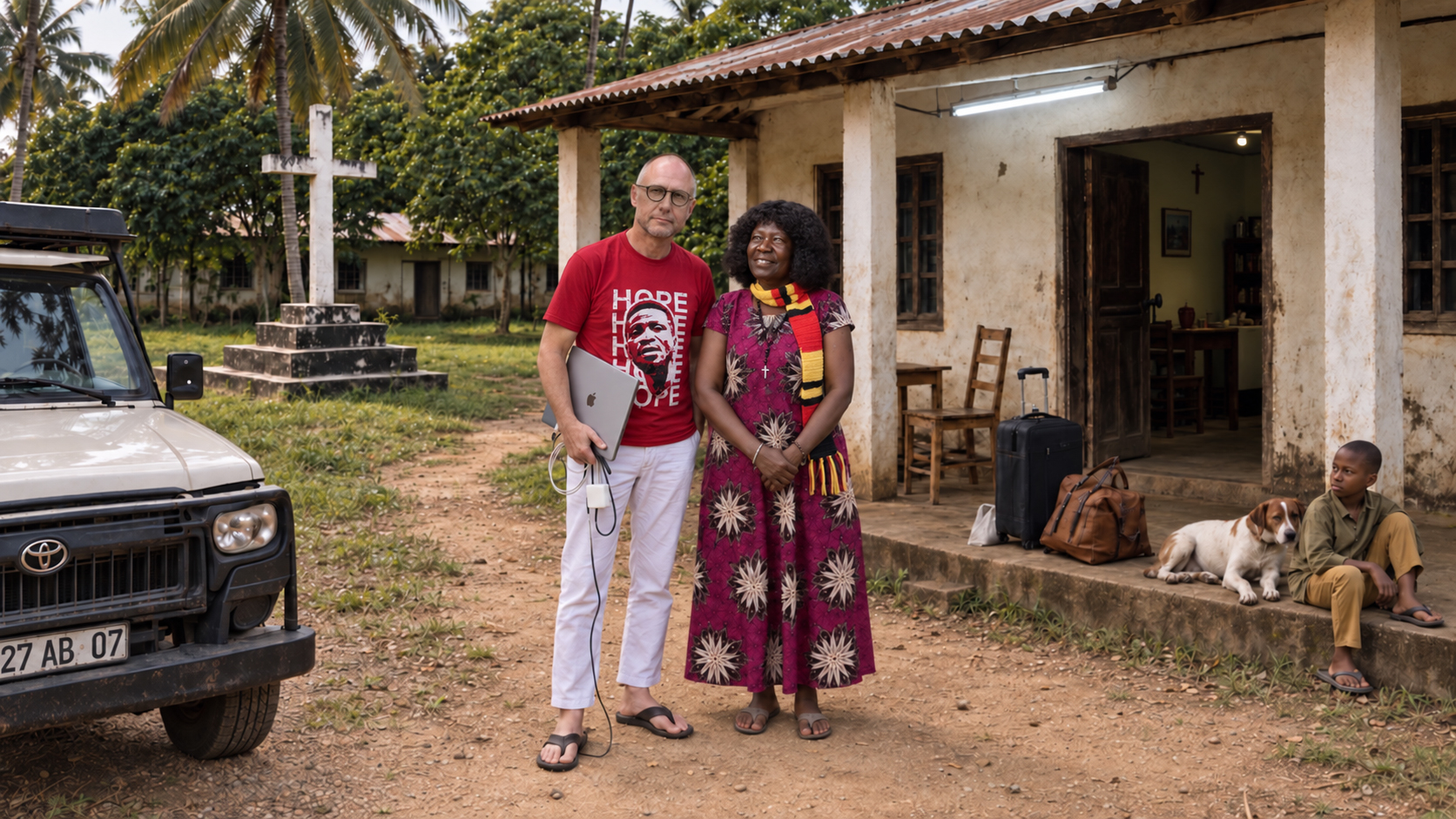
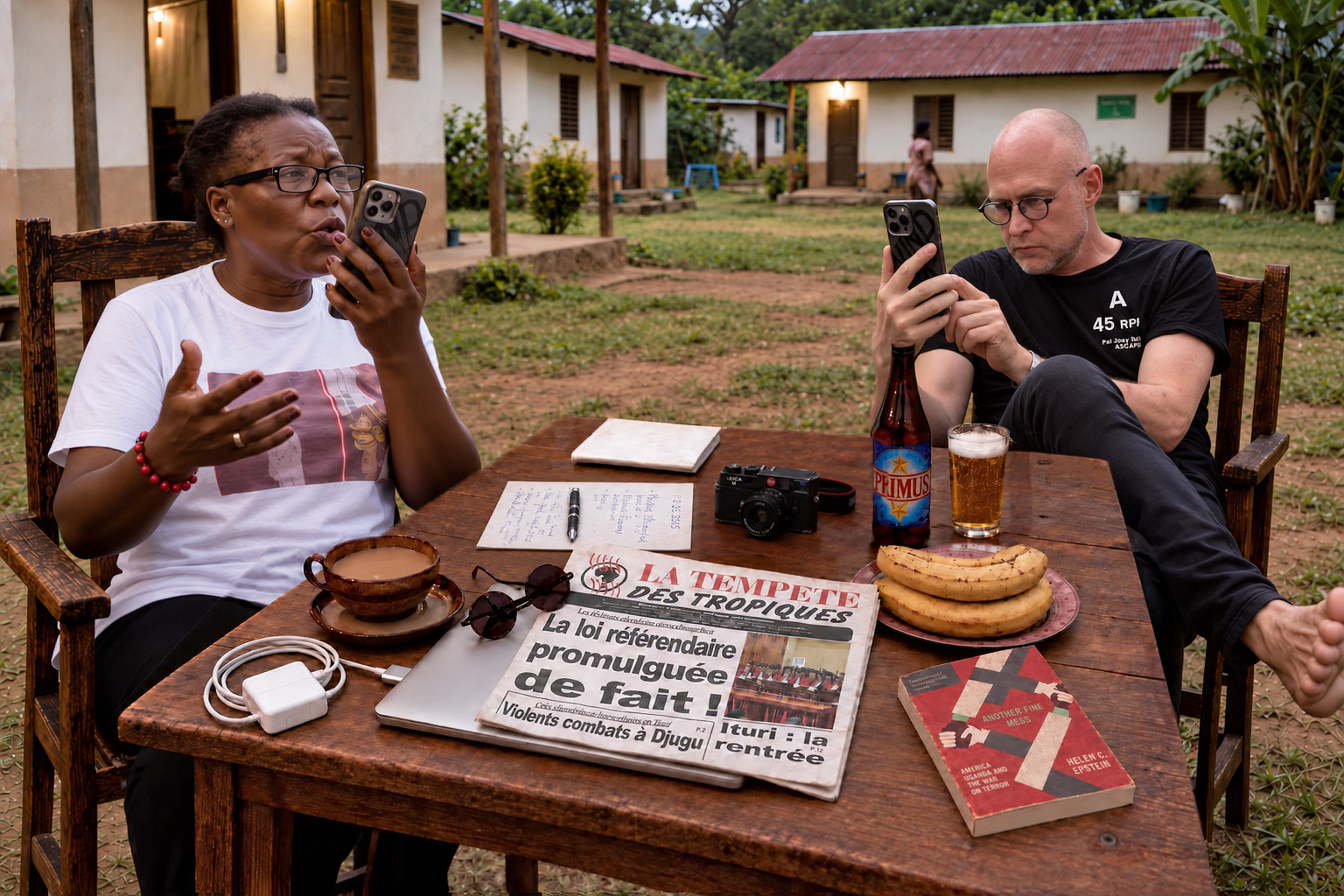
When things once again went quiet around her in July, I began following the few clues available. Then, unexpectedly, I managed to reach her through a secret phone. She invited me to visit her at a location that could not be disclosed. Before I set off, Lina had one surprisingly ordinary request: “Please bring me some wool to crochet with — black, red and yellow.”
And so I set out with a generous supply of wool in my luggage: from Berlin via Brussels to Kinshasa. From the capital of the Democratic Republic of the Congo, I took a domestic flight to Bunia, continued northwards in a small propeller aircraft and travelled the last kilometres along a badly washed-out dirt road. As I drew closer, the landscape opened into grass and shrub savannah, scattered trees and fields of cassava, maize and beans — far from the dense “Congo jungle” many Europeans imagine. Reddish-brown earth clung to shoes and tyres, turning into deep, sticky mud wherever rain had washed across the road. At the end of it stood a small Catholic mission station.
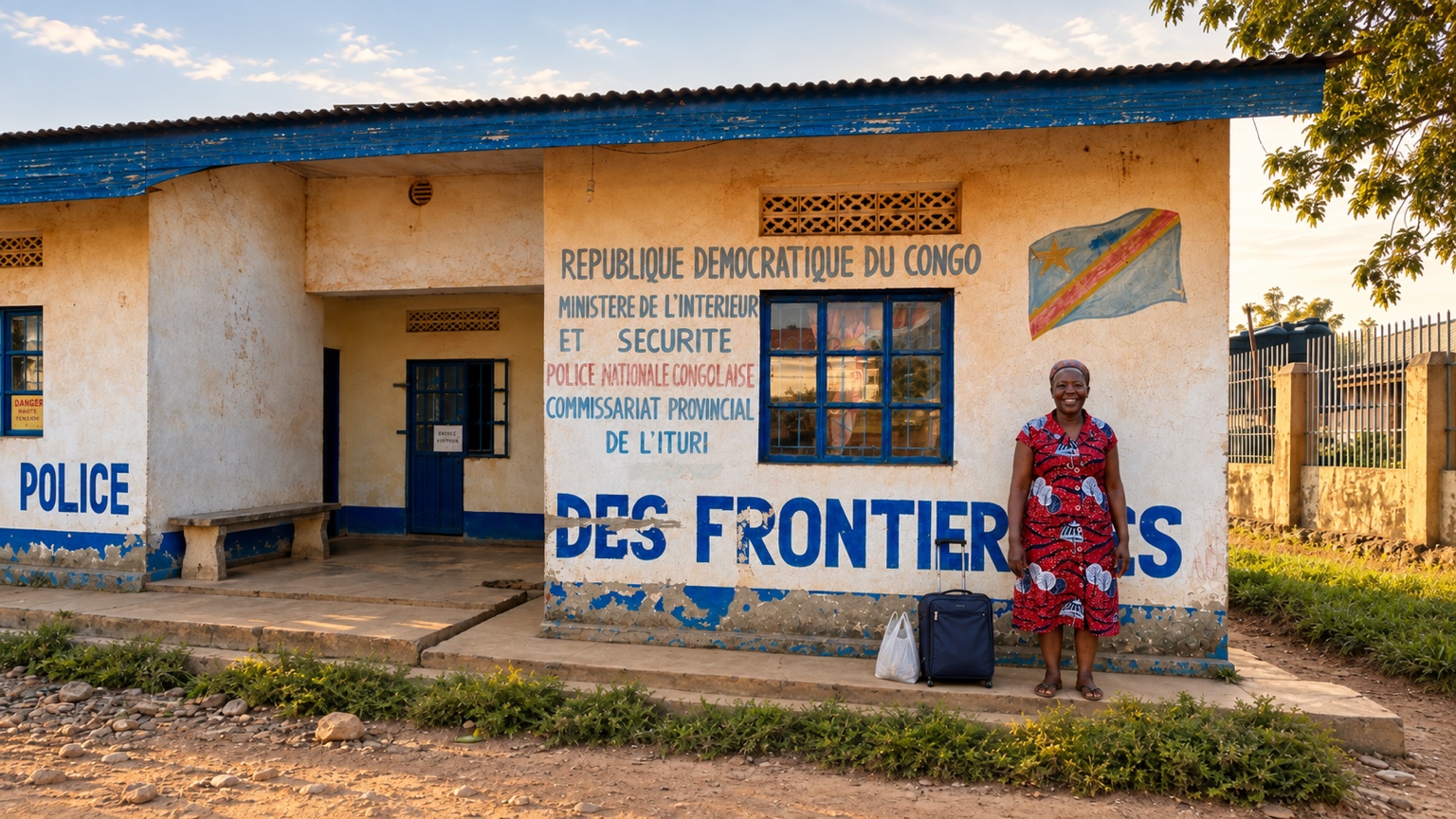
In these northern borderlands, the lines on the map cut across ties that have existed for generations. Families, languages and trade routes connect communities on either side. Lorries bring goods from Uganda; markets trade in agricultural produce, livestock, clothing and everyday necessities. Away from the main checkpoints, small paths carry people across the border as part of ordinary life. For Lina Zedriga, this is familiar terrain: she comes from this border region and knows its people and paths. Here she has found a measure of refuge, though the threat has not disappeared.
When I met her, she greeted me with the following words:
Now you can find me somewhere, but I am not nowhere.
For now, this modest outpost is her refuge: a few low buildings with corrugated iron roofs gathered around a chapel, a garden and a well. Motorcycles stand outside the gate. Chickens wander across the yard, and a generator rattles into life whenever the electricity fails. Voices from a radio switch almost effortlessly between Lingala, Lugbara, French and, occasionally, English. Lina does not wish to reveal more about her location.
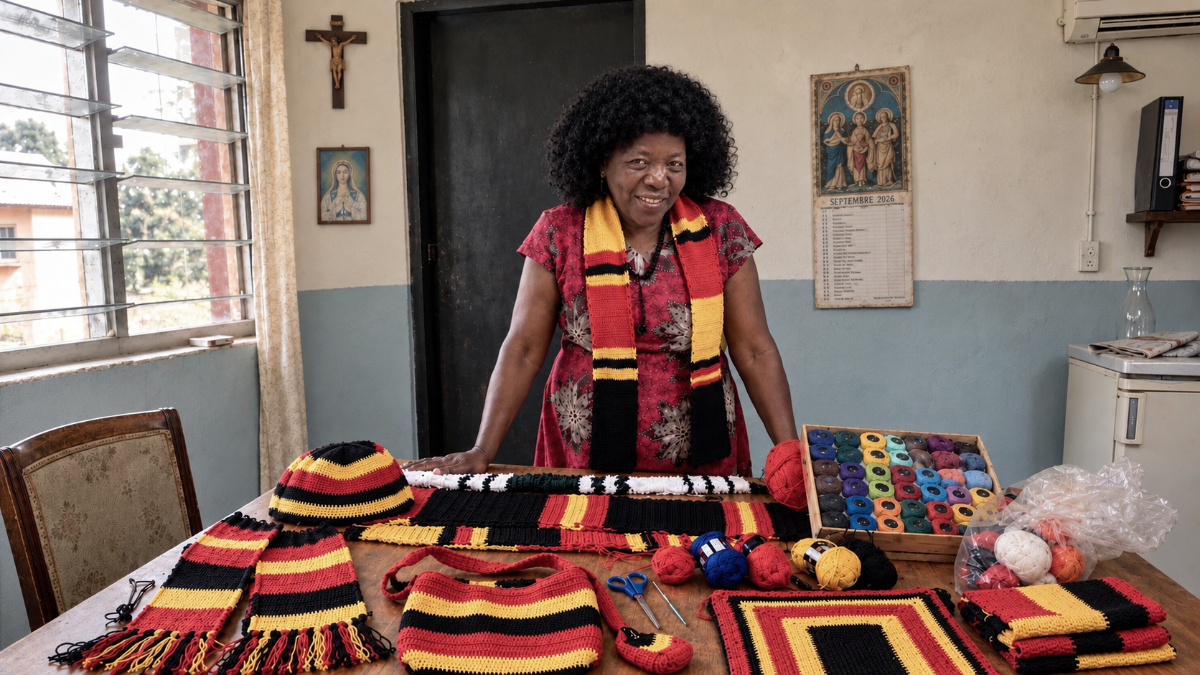
Sunlight falls through an open window onto a wooden table covered with balls of wool, crochet hooks, scarves and bags in the colours of Uganda. A crucifix hangs on the wall. Mama Lina smiles.
“At the moment, I am a nomad — for my own safety. I have stepped back for a while. I am doing this for my family, my friends and all those I love, and who love me.”
Only a few weeks ago, the lawyer stood at the helm of the NUP, after party leader Robert Kyagulanyi Ssentamu, better known as Bobi Wine, left Uganda following weeks in hiding and grave threats to his life. Her own release from detention was still painfully recent. After almost three weeks held incommunicado, she had appeared before a court and been transferred to prison. She was finally released on bail at the end of February. Only a short time later, she was entrusted with leading Uganda’s main opposition party.
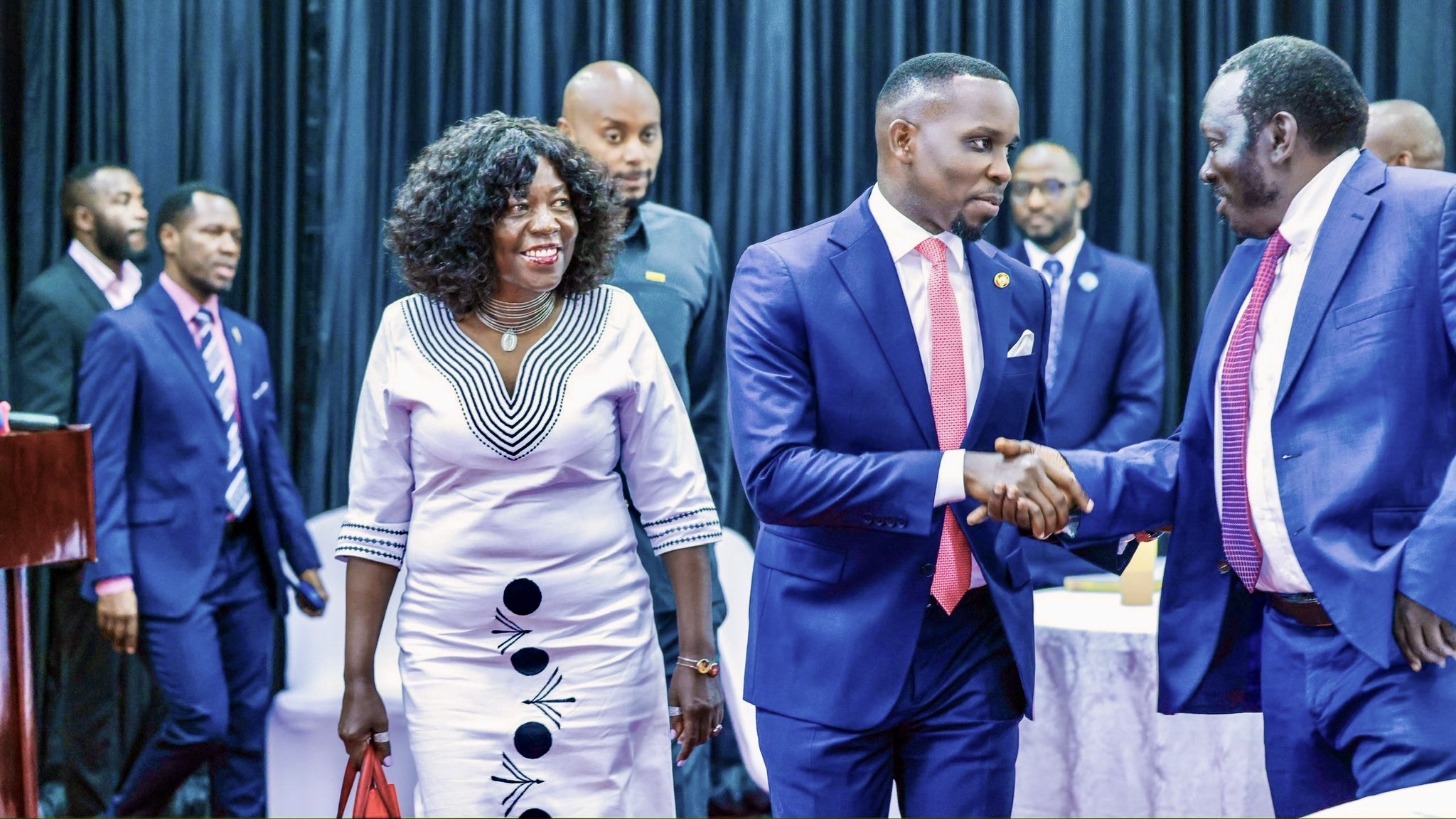
There was hardly a moment to breathe. In the morning, she appeared before supporters wearing the colours of the struggle; in the afternoon, she attended formal engagements with her customary elegance. Between them came meetings, journeys, speeches, telephone calls and countless responsibilities. Maintaining such a demanding schedule so soon after the trauma of detention took a heavy toll.
Across Uganda, people affectionately call her “Mama Lina”. The name reflects more than her age or experience. A lawyer, academic, peacebuilder, mother and devout Catholic, she has spent her life mediating conflicts, encouraging dialogue and advocating non-violence. Even when speaking about those who caused her suffering, she refuses to surrender to hatred. Forgiveness, she believes, does not mean denying injustice or abandoning the demand for accountability. It means refusing to allow injustice to rule one’s heart.
Yet the wounds remain: tinnitus, sleepless nights, inner restlessness and the constant feeling of being followed. After receiving a serious warning of another potential abduction, she decided to leave Uganda. Even in exile, she has reason to be wary. Recently, she says, her Google account was compromised and several linked smartphones were disabled or became inaccessible. Those close to her suspect an attempt to trace her whereabouts. By then, however, she had already left the location in question several weeks earlier.
One time in the basement is enough
she says, using a word Ugandans associate with a special secret illegal torture sites in Entebbe. “What happened there will remain with me for the rest of my life. I cannot put my family, my friends or myself through that again.”
Her withdrawal is not an act of surrender, but a decision to stay alive: “If you want to keep hope alive, you need to remain alive — not for selfish reasons, but in order to continue.”
To continue serving, speaking and eventually returning to stand with those who have no protection — and whose names may never appear in the news.
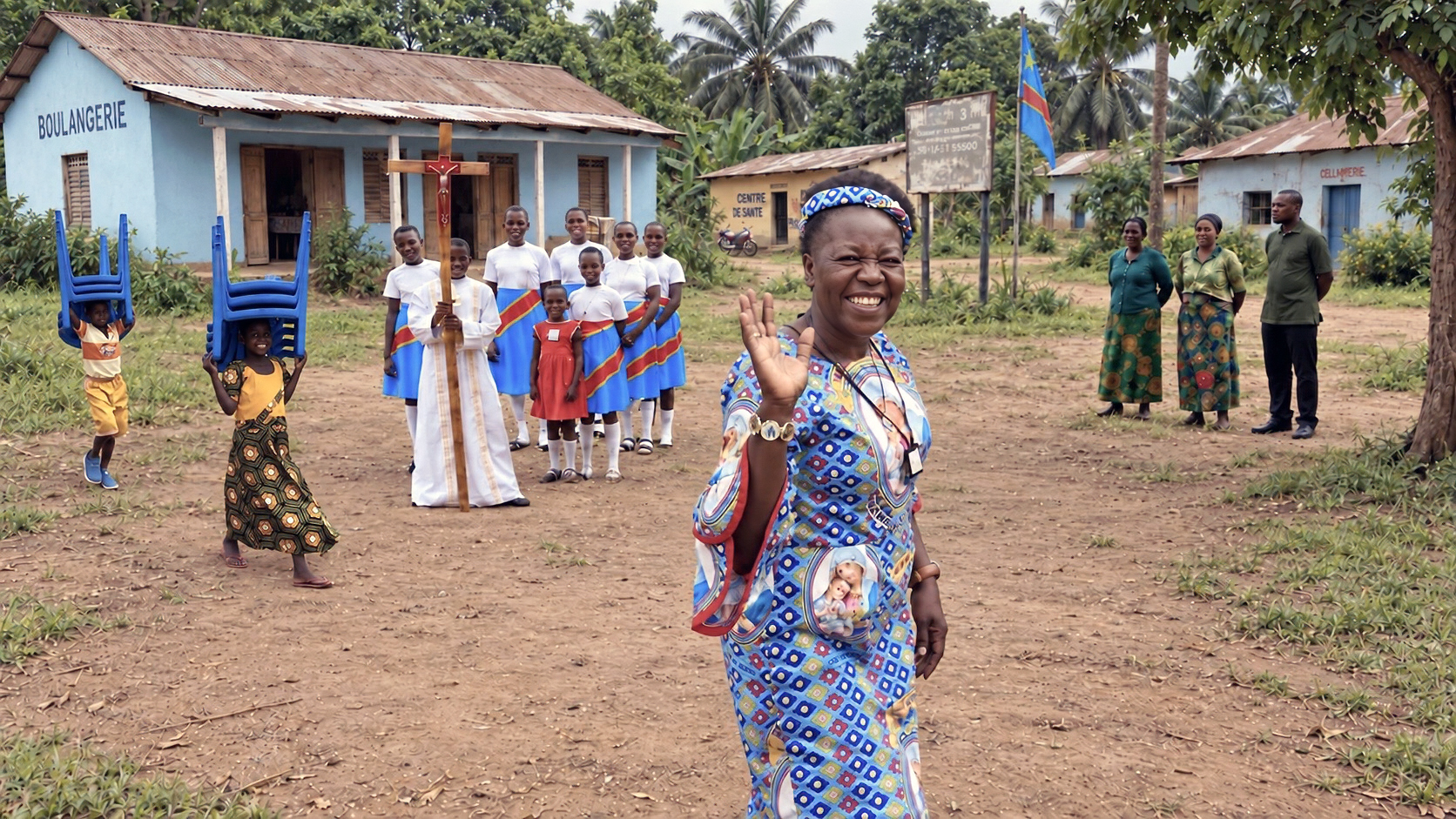
At the mission station, Lina does not simply wait. In the morning, prayers or singing can be heard from the chapel. People come to collect water, children run across the compound, and motorcycles bring visitors or small deliveries. When a downpour strikes the corrugated iron roofs, every other sound disappears for a few minutes.
I am creative. I am alive.
Friends send her yarn whenever they can, and she crochets. Bags, scarves and small figures have begun to form a modest collection. “Crocheting is therapy for me,” she explains. “When my hands are working, my thoughts become calmer. I can see something new taking shape from a single thread. That gives me a sense of security and a vision of the future.”
She also works in the garden, prays and tries to regain the balance that imprisonment and persecution took from her. Her faith sustains her: “God has not abandoned me. Mother Mary guides me, even when I cannot yet see where the road will lead.”
She is deeply grateful to those who have opened their doors to her. “I thank the brothers and sisters who have given me shelter, who pray for me and who protect me, even though doing so may place them at risk. Their love reminds me that I am not alone.”
At the moment, I am a vagabond.
Whether Lina Zedriga will remain in the Congo, return to Uganda or move elsewhere is uncertain. Tomorrow, she says, she may already be somewhere entirely different. "The sky is the limit,” she adds with a mischievous smile.
Beneath the light-hearted words lies the reality of having no fixed address, only temporary shelter and the knowledge that safety may require her to leave again without warning. Her political journey continues, but for now she cannot say where it will take her.
Her situation also reflects a much darker reality facing her homeland. Across Uganda, critical minds and independent voices face imprisonment, harassment or the pressure to flee. For those driven abroad, departure means separation from families, colleagues and the communities they hoped to serve. For the country, it means losing people whose experience and ideas are needed to shape its future.
Zedriga sees this repression as ultimately unsustainable. In her view, a country cannot endlessly drive out its own talent and silence those who imagine a different future without undermining itself. It is a conviction that helps her look beyond the uncertainty of her own circumstances.
“We have tried through the National Unity Platform. We have stood in two elections,” she says. “But those in power do not permit genuine political competition. They interfere, persecute critical voices and attempt to eliminate every form of opposition.”
The pressure reaches far beyond the party leadership. Ordinary members and grassroots activists — those who organise meetings, mobilise their neighbours or simply speak up — face arrest, violence, detention and intimidation. These are the people she hopes to stand alongside again. Despite everything, Zedriga remains convinced that their desire for freedom cannot be extinguished.
I want to see Uganda become truly free and shine again as the Pearl of Africa,
she says. “If we do not achieve it for ourselves, then we must continue for our children and grandchildren. I believe it is possible. Hope has never died in me.”
On the table before her, another piece grows slowly, stitch by stitch. Black, yellow and red — the colours of Uganda. Outside, a motorcycle passes over the red earth, its engine fading into the distance. Lina Zedriga lowers her eyes to her hands and makes the next stitch. It is a quiet reminder that resistance does not always have to be loud. Sometimes freedom begins with a single thread.
On 8 September, Dr Lina Zedriga celebrates her 65th birthday. Where, she will not tell us. Somewhere where the mountains still have snow on their peaks even in summer, she says with a knowing smile.
Her journey continues. Research is part of what comes next: a chance to return to questions that have occupied her throughout her life, drawing on decades of experience beyond the university walls. Over those years, she has built international friendships and professional connections. Beyond Uganda, her work has earned recognition and opened doors that persecution at home has tried to close.
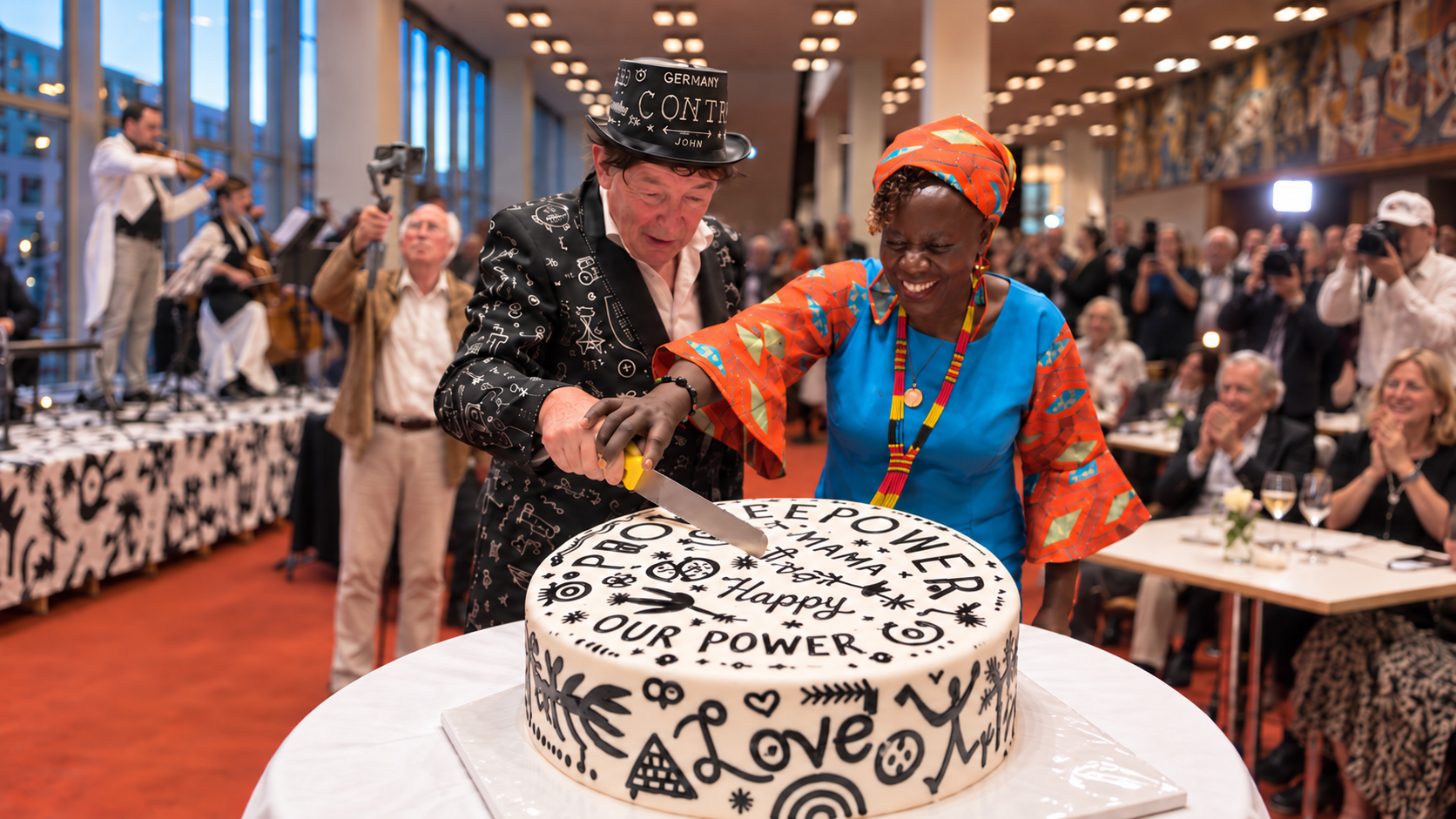
She remembers her birthday in 2022 with particular affection. In Dresden, the capital of the German Free State of Saxony, she was welcomed and celebrated at the Kulturpalast, the city’s landmark concert hall, with a warmth that still moves her. For several years, Saxony has been working to build closer ties and a lively exchange with Uganda, sustained by considerable commitment on both sides. The memory brings into focus a painful contrast in her life: celebrated in one country, persecuted in another.
I ask whether she might allow herself a break. At 65, many people are retiring; some have already been retired for years. But Lina has never understood her commitment as a job. It is a passion, she explains. Seeing something wrong, recognising an injustice and wanting to change it — none of that ends because a particular birthday has arrived.
For her 65th birthday, she wishes for a little more normality in the world. More justice for people of every gender and every generation. And safety for those who want to bring positive change to their communities and countries. Such civic commitment, she believes, should be an ordinary, valued part of public life — something to encourage and support.
Perhaps that is what normality would mean for Mama Lina: being able to pursue her passion without putting herself or those she loves in danger. To research, to teach, to speak freely. And to celebrate a birthday without having to keep its location a secret.
Konrad Hirsch is a filmmaker and journalist based in Berlin. He works across East Africa and Europe and writes about society, power and the fragile art of coexistence.